
Political Dispatch · Kentucky Midterm Coverage · May 19, 2026
Kentucky's 2026 primary election arrived as more than a routine exercise in democratic nomination. It landed as a thunderclap moment within the broader national story of Donald Trump's dominance over the Republican Party — and the question of whether any independent-minded conservative could still survive within it. With polls open from 6 a.m. to 6 p.m., voters across the commonwealth's 120 counties were called upon to choose nominees for the United States Senate, multiple congressional seats, and scores of state legislative offices, all in an atmosphere charged with record campaign spending, presidential interventions, and the shadow of Mitch McConnell's long, soon-to-end tenure in Washington.
The stakes could not have been higher. Two of the most expensive and fiercely contested Republican primary battles in the country were unfolding simultaneously in Kentucky: one to fill a United States Senate seat that had been held by McConnell since 1985, and another in the northern part of the state that had attracted more outside spending than any House primary in the entire history of American politics. At the same time, voters were choosing nominees for an open congressional district, weighing contested Democratic primaries in Louisville, and deciding the fate of dozens of state house and senate seats. The result was an election day that would help define the trajectory of Kentucky — and American — politics for years to come.
The Race to Replace Mitch McConnell
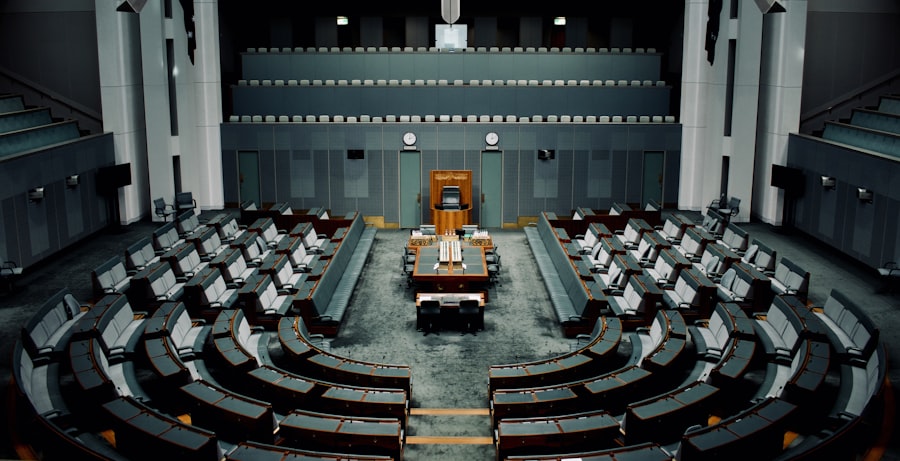
The retirement of Senator Mitch McConnell, the most powerful Republican in the Senate for much of the past two decades and the longest-serving senator in Kentucky history, opened a political vacuum unlike anything the state had seen since 1972. McConnell, who was first elected in 1984 and re-elected six times, chose not to seek an eighth term — leaving his seat open for the first time in over half a century and setting off one of the most consequential Republican primary contests in modern history.
The race began as a three-way battle between three prominent Kentucky Republicans: Congressman Andy Barr, who had represented Kentucky's 6th Congressional District since 2013; former Attorney General Daniel Cameron, who had served as the state's top law enforcement officer from 2019 to 2024 and had been the Republican gubernatorial nominee in 2023; and businessman Nate Morris, a wealthy entrepreneur with backing from prominent conservative influencers including Turning Point USA founder Charlie Kirk, Donald Trump Jr., and Elon Musk.
For months, the three-way race was remarkably close. Polls showed Morris, Barr, and Cameron trading leads, with each candidate vying to claim the mantle of the most loyal Trump supporter. The central question that animated nearly every aspect of the primary was not a matter of ideology — all three candidates positioned themselves firmly within the Trump orbit — but rather which of them could credibly claim to be the president's genuine champion.
The dynamics of the race shifted dramatically in early May 2026, just days before the Kentucky Derby, when President Trump intervened decisively. He simultaneously announced that he had persuaded Nate Morris to withdraw from the primary and endorsed Congressman Andy Barr. Although Morris's name remained on the ballot — and by law, his votes would not be counted, per the Kentucky Secretary of State — the field effectively narrowed to a two-man contest between Barr and Cameron.
"Both candidates have past ties to McConnell, though they have made clear attempts to distance themselves from the current senator, who represents establishment Republicanism."
With Trump's endorsement secured, Barr's campaign and allied PACs dominated the airwaves over the final three weeks of the race. Poll after poll showed the dynamics breaking in Barr's direction. Cameron, who had built genuine grassroots support and the kind of organic name recognition that his campaign argued money could not simply buy, remained competitive but increasingly found himself on defense. His campaign emphasized that Kentuckians knew him "not from ads he'd run but from the things he had done," a pointed contrast with his opponent's more recent statewide profile.
On the Democratic side, two of the most recognizable names in Kentucky Democratic politics returned to seek their party's nomination. Amy McGrath, the Marine combat pilot who narrowly defeated Charles Booker in the 2020 Democratic primary before losing to McConnell in the general election, entered the race again. So too did Charles Booker, the Louisville progressive who had won the Democratic Senate nomination in 2022 before losing to Senator Rand Paul.
The Democratic field also included a wildcard: Dale Romans, a successful thoroughbred trainer with deep roots in Kentucky's signature racing culture, who positioned himself as the most electable moderate candidate in a state that has grown increasingly Republican. Romans argued that the party needed someone who could credibly compete in the general election — not simply energize a base that had been shrinking for decades. A Democratic candidate has not won a Senate seat in Kentucky since 1992, and the party last won this particular seat in 1978. Yet with President Trump's approval ratings showing signs of erosion nationally, some Democrats believed a genuine opportunity had opened — one that required a careful, centrist approach rather than ideological fervor.
The race was also notable for its extraordinary financing. Total spending exceeded $50 million, much of it flowing from billionaire donors and dark money organizations with little connection to Kentucky itself. The sheer scale of outside money prompted widespread commentary about the nature of modern political campaigns — whether they had become less about genuine voter persuasion and more about the financial firepower of national ideological networks. For many Kentuckians watching the saturation bombing of television advertisements, the Senate primary felt less like a contest about the commonwealth's future and more like a proxy war being fought on their soil by distant powers.
Thomas Massie's Last Stand: The Most Expensive House Primary in History

If the Senate primary represented the battle for Mitch McConnell's legacy, then the contest in Kentucky's 4th Congressional District represented something even more philosophically charged: a referendum on whether any degree of Republican independence could survive in the Trump era. The race between incumbent Congressman Thomas Massie and Trump-endorsed challenger Ed Gallrein attracted more campaign and outside spending than any House primary contest in the entire history of the United States — a staggering total exceeding $32 million that turned a rural and suburban northern Kentucky district into a national political flashpoint.
Massie, a Massachusetts Institute of Technology-trained engineer, inventor, and farmer from Lewis County in eastern Kentucky, had represented the district since 2012. In Washington, he had become one of the most reliably independent voices in Congress — a libertarian-leaning gadfly who voted against foreign aid, opposed government spending regardless of which party held power, and refused to bend to executive pressure from presidents of either party. He had irritated Trump repeatedly over the years: in 2020, he forced an in-person House vote on the COVID relief bill, prompting Trump to call him a "third-rate grandstander" and demand that he be thrown out of the Republican Party. Yet despite the tempestuous relationship, Trump had actually endorsed Massie's re-election in 2022. The détente, however, proved temporary.
By 2025, Massie had accumulated new grievances with the administration. His relentless insistence on the release of the Jeffrey Epstein files, his public opposition to what he characterized as an unnecessary war with Iran, and his general posture of principled non-compliance had exhausted Trump's patience. The president began actively searching for a primary challenger capable of defeating him.
"It's Trump versus Massie. The race has become the most expensive House primary in American history."
The challenger Trump found was Ed Gallrein, a 68-year-old retired Navy SEAL and fifth-generation farmer from Shelby County, east of Louisville. Gallrein had never held public office and had actually lost a Republican primary for a Kentucky state senate seat just two years earlier in 2024. He was not a natural orator and was described by observers as an uninspiring public speaker. But he had something Trump valued more than eloquence: absolute loyalty to the president's agenda, a military service record that could be presented as patriotic credibility, and roots in the district deep enough to withstand charges of being an outsider. Trump personally recruited Gallrein for the race, meeting with him in the Oval Office before he formally announced his candidacy, and later rallied for him at a raucous event in northern Kentucky in March 2026.
The financial scale of the race was breathtaking. Massie's campaign raised approximately $5.5 million for the cycle, including $2.5 million in just the first quarter of 2026 — much of it from a surge of national donors who viewed the race as a test of whether genuine Republican independence could still survive. Of his more than 20,000 first-quarter donors, approximately 76 percent were contributing to his campaign for the first time ever. Yet the majority of the truly massive outside spending — the kind that dwarfed anything individual campaigns could manage — flowed against him.
Massie publicly identified the primary funders of the campaign against him: pro-Israel organizations including AIPAC, the Republican Jewish Coalition, and Christians United for Israel, which he claimed accounted for approximately 95 percent of the outside money arrayed against his re-election. The central outside vehicle on Gallrein's side was MAGA KY PAC, run by Trump senior political adviser Chris LaCivita, which spent approximately $5.6 million on anti-Massie advertising alone. Two-thirds of the $17 million in total television advertising ran against Massie. The congressman responded by introducing legislation requiring AIPAC to register as a foreign agent — a move that generated enormous national controversy and only intensified the fundraising and attention around the race from all directions.
The 4th Congressional District itself is the wealthiest congressional district in Kentucky, anchored by the northern Kentucky suburbs of Cincinnati in Boone, Kenton, and Campbell counties, with a secondary population center in the northeastern Louisville suburbs and a long stretch of rural Appalachian communities running east toward the West Virginia border. With a Cook Partisan Voter Index of R+18, it is one of the fifty most Republican districts in the entire country. The winner of the Republican primary would almost certainly win the general election in November — making the primary itself, as is often the case in such safe seats, the only contest that truly mattered.
Gallrein declined to debate Massie in multiple forums, including a marquee event on Kentucky Educational Television. At several local Republican party gatherings, Massie sat beside an empty chair, pointedly highlighting his opponent's absence. Gallrein dismissed the criticism, telling voters: "I'm debating him every day. I'm talking right to the American people, just like the president does, with no middleman." On the eve of the primary, he declared: "There has never been a more important time to stand behind our president." Massie, for his part, told supporters at an election eve rally that the attacks would backfire on his opponents. "They've tried to turn me into a villain," he told the crowd. "The more they try to punish me, the more powerful I get."
The national significance of the race extended well beyond Kentucky's borders. It arrived days after Senator Bill Cassidy of Louisiana — who had voted to convict Trump after his second impeachment — lost his own primary to a Trump-backed challenger. It came weeks after Trump had successfully ousted several Indiana state senators who refused to support a redistricting push he demanded. The pattern was unmistakable: Trump was systematically purging the Republican Party of anyone who had defied him, and the question of whether the most defiant of all, Thomas Massie, could survive was being watched closely by Republicans across the country who had their own complicated relationships with the president.
The Open Seat Battle: Central Kentucky's Next Representative
The decision by Congressman Andy Barr to give up his 6th Congressional District seat in central Kentucky to pursue the Senate nomination created a rare and genuinely competitive open-seat race — the kind of contest where the primary field on both sides is crowded, ambitious, and consequential. The 6th District, which surrounds Lexington and extends through the heart of the Bluegrass region, has historically leaned Republican but is considered one of the more competitive seats in the state's congressional delegation, making the choice of nominees on both sides a matter of some significance for the general election in November.
On the Republican side, the clear favorite entering primary day was Ralph Alvarado, a former state senator and the candidate endorsed by President Trump. Alvarado had left the Kentucky General Assembly in 2023 to lead Tennessee's state health agency, and his entry into the race represented a return to Kentucky politics. His background in healthcare policy and his existing statewide network gave him a structural advantage over his opponents, and the Trump endorsement provided a significant boost in a primary electorate that had become increasingly responsive to the president's preferences.
Facing Alvarado were two other Republican candidates: state Representative Ryan Dotson, a sitting member of the Kentucky House who had developed a profile as a conservative legislator during his time in Frankfort; and Greg Plucinski, a businessman who had founded a biotech and pharmaceutical company and presented himself as a private-sector problem-solver rather than a career politician. Both struggled to cut through the combination of Alvarado's name recognition, his endorsement advantage, and his fundraising strength.
The Democratic primary for the 6th District was notable for the breadth and caliber of its field, reflecting genuine Democratic ambition in a district that — while likely to remain in Republican hands after the general election — presented what the party believed was a better opportunity than anywhere else in Kentucky's congressional delegation. Leading the Democratic pack in both fundraising and endorsements was Zach Dembo, a Navy veteran and former federal prosecutor who had secured backing from two of the most prominent names in Kentucky Democratic politics: former Congressman Ben Chandler and former Lexington Mayor Jim Gray. Dembo's combination of military service, legal credentials, and establishment endorsements positioned him as the kind of candidate Democrats believed could compete in a competitive general election.
Also seeking the Democratic nomination was Cherlynn Stevenson, a former member of Democratic leadership in the Kentucky House, who brought legislative experience and the endorsement of Lieutenant Governor Jacqueline Coleman. Her campaign emphasized her familiarity with the machinery of state government and her relationships within the Democratic Party's shrinking but still-present network of elected officials.
The Democratic field also included two candidates who brought distinctive profiles to the race. David Kloiber, a former Lexington city councilman, drew attention for his unconventional approach to voter outreach — his campaign deployed artificial intelligence to write personalized letters to registered voters, a tactic that generated both curiosity and controversy in a district where traditional retail politics still mattered. And Erin Petrey, a former Amazon Web Services employee, centered her campaign on a striking policy position: she called for a statewide moratorium on new data center construction in Kentucky, arguing that the state's recent data center boom was consuming enormous resources and energy without delivering proportionate economic benefits to local communities.
The range of Democratic candidates in the 6th District primary illustrated both the opportunities and the challenges facing the party in Kentucky. On one hand, the breadth of credible contenders suggested that Democratic ambition had not been entirely extinguished in the Bluegrass State. On the other hand, the party faced the fundamental structural challenge that has defined Kentucky politics for the past three decades: the state's voters had shifted dramatically rightward, and any Democratic nominee would begin the general election as a significant underdog regardless of personal qualifications or campaign resources.
The Battle for Frankfort: PAC Money and the State Legislature
Beyond the high-profile federal races that dominated national media coverage, the 2026 Kentucky primary also featured dozens of contests for seats in the Kentucky General Assembly — contests that, while receiving far less national attention, would shape the day-to-day governance of the commonwealth for the next two years. Republicans entered the cycle with supermajorities in both chambers of the state legislature, controlling at least 80 percent of the seats in both the House and Senate, and they were expected to maintain roughly the same level of dominance after the November general election. Democrats had left many legislative seats entirely unchallenged, a reflection of the party's diminished resources and organizational capacity in a state that had shifted dramatically away from them over the past three decades.
Yet even within the predictable Republican dominance, the primary season brought genuine drama — and significant outside spending. Independent PACs had invested a total of $1.6 million in Kentucky House Republican primary races alone, seeking to influence which specific Republicans would hold power in Frankfort regardless of which party ultimately controlled the chamber. The money reflected a sophisticated understanding of Kentucky's political reality: winning the Republican primary in a supermajority-safe district was, in most cases, equivalent to winning the election itself.
Some of the most contentious GOP primary battles were concentrated in northern Kentucky, a region that has seen a particularly turbulent period of intraparty conflict in recent cycles. Several Republican incumbents had suffered upset defeats in the area in recent elections, and 2026 brought fresh challenges for a new set of incumbents.
Representatives Kim Moser and Kim Banta faced tough primary challenges from opponents who attacked their 2023 votes against a bill that would have banned gender-affirming healthcare services for transgender minors. Both incumbents had broken from the majority of their Republican colleagues on that vote, and their opponents used the deviation as a central line of attack. Moser and Banta were aided by approximately $300,000 in independent PAC spending from business groups and party leadership — a significant investment in a state legislative primary that illustrated how even seemingly local races had become nationalized by ideological and cultural flashpoints.
Also in northern Kentucky, two incumbent representatives associated with what observers had come to call the "liberty wing" of the Republican Party — representatives known for their skepticism of leadership power and their commitment to transparency in legislative procedures — faced relatively moderate primary challengers. Representative Felicia Rabourn was in a rematch against Mark Gilkison, the challenger she had defeated previously, who was now backed by advertising spending from the Kentucky Chamber of Commerce and two PACs funded by the sports betting industry and the Jefferson County teachers union — an unusual coalition that reflected the transactional nature of legislative politics. Representative Steven Doan faced Jesse Forman, who had received similar support from the teachers union PAC.
In western Kentucky, a different kind of rematch was playing out. Representative Kim Holloway, who had pulled off an upset victory over longtime incumbent Richard Heath in 2024, now faced Heath again in a primary rematch. This time, Holloway was aided by $312,000 in advertising spending from the Kentucky Conservative Fund — a PAC entirely funded by sports betting companies that had become one of the most active outside spenders in state legislative primaries. Across the cycle, the sports betting PAC spent more than $830,000 on advertising supporting seven different Republican incumbents, cementing the industry's role as a significant political player in the state's internal GOP dynamics.
In the Senate chamber, Senator Brandon Smith of Hazard, a veteran legislator seeking a sixth term, faced a primary challenge from House Representative Bill Wesley of Ravenna. Party leadership and the sports betting PAC both invested in advertising supporting Smith's re-election bid, reflecting the alignment of the establishment behind the incumbent.
The pattern of PAC spending in Kentucky's legislative primaries illustrated a broader trend in American state politics: the increasing nationalization and professionalization of what had once been genuinely local contests. The sports betting industry, which had secured legalization in Kentucky in recent years, was now deploying the financial benefits of that legalization to protect the legislators it considered favorable to its interests. Business groups, teachers unions, and ideological PACs were each playing in races that once would have been decided entirely by local relationships and retail politics. For many Kentucky legislators, the 2026 primary was a reminder that the era of purely local politics had decisively ended.
Louisville's Democrats: Scandal, Ambition, and the Fight for the Party's Future
For Kentucky Democrats, the story of the 2026 primary was in many ways concentrated in Louisville — the state's largest city and the urban core where the party retains its most significant legislative presence. With Republicans dominating the rest of the state's political geography, Louisville's Democratic-held seats in the Kentucky House and Senate represented one of the few arenas where intraparty competition genuinely determined who would govern. And in 2026, several of those Louisville contests were defined not just by competing policy visions but by scandal, controversy, and questions about the fitness of incumbents to continue in office.
The most dramatic of Louisville's Democratic primary contests involved Representative Daniel Grossberg, a sitting House member seeking re-election in House District 30. Grossberg entered the primary facing not just two primary challengers but public opposition from some of the most prominent names in Kentucky Democratic politics. Governor Andy Beshear was among the Democrats who called publicly on Grossberg to resign from office, following allegations of sexual harassment or misconduct from nine different women spanning two decades. Grossberg denied all the allegations and characterized the campaign against him as antisemitic targeting designed to drive him from office. The contest became one of the most emotionally charged legislative primaries in the state, with voters forced to weigh competing claims about the credibility of accusers, the presumption of innocence, and the standards that elected officials should be held to.
A different but equally complicated situation defined the primary campaign of Representative Beverly Chester-Burton, another Democratic incumbent in Louisville seeking re-election. Chester-Burton had been sentenced the previous year on a driving while intoxicated charge — the second such conviction she had faced in a period of five years. Her two Democratic primary opponents, meanwhile, each had their own recent criminal convictions, creating an unusual situation in which voters in the district were choosing between candidates with legal troubles on all sides. The race became something of a grim referendum on the Democratic Party's candidate pipeline in some Louisville districts.
Not all of Louisville's Democratic primary contests were defined by controversy. In the race to replace outgoing Representative Pamela Stevenson — who was herself among the Democratic candidates running for the United States Senate — two Democrats offered genuinely contrasting visions of the party's future. Robert LeVertis Bell, a public school teacher and self-described democratic socialist, represented the progressive wing of the party that believed Louisville's Democratic voters wanted more ambitious, left-leaning governance. Joi McAtee, a graduate instructor at the University of Louisville, offered a somewhat different profile, presenting herself as a candidate oriented toward the practical concerns of working families and educational access.
In the Kentucky Senate, two Democrats were competing for the party's nomination in an east Louisville district that would likely see them face three-term Republican Senator Julie Raque Adams in November. The Democratic candidates were Luke Whitehead, a former University of Louisville basketball player, and Sarah Cole McIntosh, a former member of the Jefferson County Board of Education. Both candidates were running in a district that Democrats believed represented one of their better opportunities to flip a Senate seat given demographic changes in Louisville's eastern suburbs, though the odds remained challenging against an entrenched incumbent.
Taken together, Louisville's Democratic primaries in 2026 painted a complex portrait of a party operating under significant constraints. With its legislative presence concentrated in one metropolitan area, the party lacked the geographic depth to contest power across the state. Its candidate pipeline, as several of the contested primaries illustrated, was uneven in quality. And yet the city continued to produce genuine political talent and genuine democratic competition — contested primaries in which voters exercised real choices about their representation and the direction of their party. For Kentucky Democrats, Louisville remained both the foundation of their current existence and the launching pad for whatever political revival they hoped to build.
The broader Democratic challenge in Kentucky reflected national trends while also carrying distinctly local dimensions. The state had once been a competitive political battleground — as recently as the late 1990s, Democrats held the governorship, both Senate seats, and a majority of the congressional delegation. Three decades of political realignment had transformed it into one of the most reliably Republican states in the country. Yet Democrats like Governor Andy Beshear continued to demonstrate that individual candidates, with the right combination of personal appeal, moderate positioning, and strong organization, could still win statewide. Whether that model could be replicated broadly enough to reverse the party's structural decline remained the central question facing Kentucky Democrats as they headed into the 2026 general election cycle.
"A Democratic candidate hasn't won a Senate seat in Kentucky since 1992 as the state's voters shifted rightward, but the party hopes Trump's declining popularity could give them a longshot chance."
Kentucky and the National Moment: What It All Means
Kentucky's 2026 primary did not occur in isolation. It was the most visible and consequential chapter in a broader national story playing out across the country in the spring of 2026: the story of Donald Trump's systematic consolidation of control over the Republican Party and the struggle of various factions within that party to define what it stood for beyond personal loyalty to the president. The outcomes in Kentucky — in the Senate race, in the Massie-Gallrein contest, in the legislative primaries — would send signals that reverberated far beyond the commonwealth's borders.
The Kentucky primary arrived as part of a remarkably busy primary election day. Six states held primary elections on May 19, 2026 — Alabama, Georgia, Idaho, Kentucky, Oregon, and Pennsylvania — making it the busiest single primary day of the 2026 midterm cycle to that point. In several Republican primaries across these states, Trump's influence over his party was simultaneously being tested. The pattern of results emerging from these contests would collectively reveal the extent to which the president's endorsements had become the decisive factor in Republican primaries, and whether any pocket of resistance to his total dominance of the party remained.
The Kentucky primary also took place in the context of a rapidly approaching midterm election in which control of both the House and Senate was potentially at stake. With 168 days remaining until the November 3, 2026 general election as of primary day, the nominees chosen in Kentucky's primary contests would soon face the voters of the broader electorate — an electorate that, in the current political environment, would be rendering judgment not just on individual candidates but on the direction of the country under unified Republican government.
For the Senate race in particular, the national implications were profound. The seat being vacated by Mitch McConnell was not just any Senate seat — it was the seat of a man who had served as Senate Majority Leader and Minority Leader for the better part of two decades, who had shaped the modern federal judiciary through his management of the confirmation process, and who represented a particular strain of institutional conservatism that was now very much in tension with the populist, personality-driven politics of the Trump era. The Republican who won this seat would be choosing, in some sense, what kind of Republican senator they would be: a loyal instrument of presidential power, or an independent institutional actor in the tradition McConnell himself had occasionally embodied.
The Massie-Gallrein contest carried its own national weight. Massie had become, in the months leading up to the primary, something of a symbol for those on both the left and the libertarian right who hoped that some form of principled congressional independence could survive the Trump era. His bipartisan work on the Epstein files had won him admirers across the ideological spectrum. His defeat — if it came — would represent the most dramatic illustration yet of the price of Republican heterodoxy. His survival, on the other hand, would suggest that even in the Trump era, deep-rooted local relationships and a genuine record of service to constituents could withstand the combined force of presidential displeasure and record outside spending.
Kentucky's primary was also notable for what it revealed about the evolving economics of American elections. The combined spending across the Senate and 4th District House primaries alone exceeded $82 million — a figure that would have seemed almost unimaginable for a single state's primary contests just a decade earlier. The source of that spending — much of it flowing from billionaires, dark money networks, and national ideological organizations with little direct connection to Kentucky — raised fundamental questions about democratic accountability. Who, in the end, was being represented when the electorate's choices were so heavily shaped by money from outside the state, outside the district, outside the community?
These were not questions that Kentucky's primary day would definitively answer. But they were questions that the primary's extraordinary circumstances forced into sharp relief. As voters lined up at polling stations across the Bluegrass State on the morning of May 19, 2026 — from the Appalachian hollows of eastern Kentucky to the Cincinnati suburbs of the north to the Louisville neighborhoods of the west — they were participating in something that was simultaneously deeply local and unmistakably national: a test of democratic will in a moment of profound political transformation.
Kentucky had always occupied an unusual place in American political geography — a border state with a complicated history, a place where the traditions of Appalachian independence, Southern conservatism, and urban liberalism coexisted in perpetual tension. On primary day 2026, all of those tensions were on full display, compressed into a single day of voting that would help determine not just who represented Kentucky in Washington and Frankfort, but what kind of democracy America was becoming.


.png)


0 Comments