
Breaking Analysis · Middle East Geopolitics · May 10, 2026
The Road to the Proposal: How War Reshaped Diplomacy
The diplomatic landscape of the Middle East was irrevocably altered on February 28, 2026, when the United States and Israel launched a coordinated series of military strikes against the Islamic Republic of Iran. The stated objectives of the operation were ambitious and sweeping: to induce regime change in Tehran, to dismantle Iran's nuclear programme, and to neutralise its ballistic missile infrastructure. What followed was not a swift capitulation, but a prolonged and devastating conflict that drew in regional powers, disrupted global energy markets, and tested the resolve of both Washington and Tehran to their respective limits. Iran's Supreme Leader, Ali Khamenei, was killed in those initial strikes — an event of seismic significance. His son was swiftly appointed as successor, and the Islamic Republic, far from collapsing, recalibrated and launched its own series of devastating counter-strikes.
Iran's retaliation was calculated and strategically precise. It targeted US military bases across the region, struck military and civilian infrastructure in Arab states perceived as complicit in the Western-led campaign, and — most consequentially for the global economy — moved to close the Strait of Hormuz. That narrow waterway, through which approximately one-fifth of the world's oil and liquefied natural gas supply passes, had long been Iran's ultimate geopolitical trump card. Its closure sent energy markets into a frenzy, with crude oil prices spiking dramatically, supply chains rupturing, and Gulf states — already reeling from Iranian strikes — facing an acute economic emergency that rippled outward to every corner of the globe.
The conflict placed President Donald Trump, now in his second term, in an extraordinarily difficult position. Having entered the confrontation with maximalist demands — calling on March 6 for Iran's "unconditional surrender" and threatening to attack Iranian energy infrastructure and bridges if a deal was not reached — Trump found himself confronting the realities of an adversary that had absorbed enormous punishment yet refused to fold. He set successive deadlines for a deal: March 21, then March 23, then April 7. Each passed without agreement. On April 21, Trump announced an extension of the existing ceasefire — itself already a fragile arrangement in place since April 8 — contingent on Iran submitting a formal proposal for negotiations.
By early May 2026, the parameters of a potential resolution were beginning to take shape, though the distance between the two sides remained formidable. Washington was now working through Pakistan as a diplomatic mediator — a notable choice given Islamabad's complex relationships with both Washington and Tehran. The groundwork for these communications had been painstakingly laid over weeks of back-channel exchanges. When the United States formally transmitted a 14-point proposal to Tehran earlier in the week of May 5, it represented the most concrete American offer yet — and set the stage for the dramatic developments of May 10, when Iran finally transmitted its response back through the Pakistani channel.
- February 28, 2026: US and Israel launch coordinated military strikes on Iran, targeting nuclear and missile infrastructure.
- March 2026: Iran retaliates; Supreme Leader Khamenei killed; Strait of Hormuz de facto closed to international shipping.
- April 8, 2026: Initial US-Iran ceasefire announced; neither side formally collapses it despite continued skirmishes.
- April 21, 2026: Trump extends ceasefire pending Iran's formal submission of a negotiating proposal.
- Late April 2026: Iran submits initial counter-proposal suggesting Hormuz and ceasefire issues be resolved before nuclear talks begin.
- Early May 2026: US delivers 14-point formal proposal to Tehran via Pakistani intermediaries.
- May 10, 2026: Iran formally transmits its response to the US proposal through Pakistan.
Washington's 14-Point Document: Ambition, Demands, and Incentives
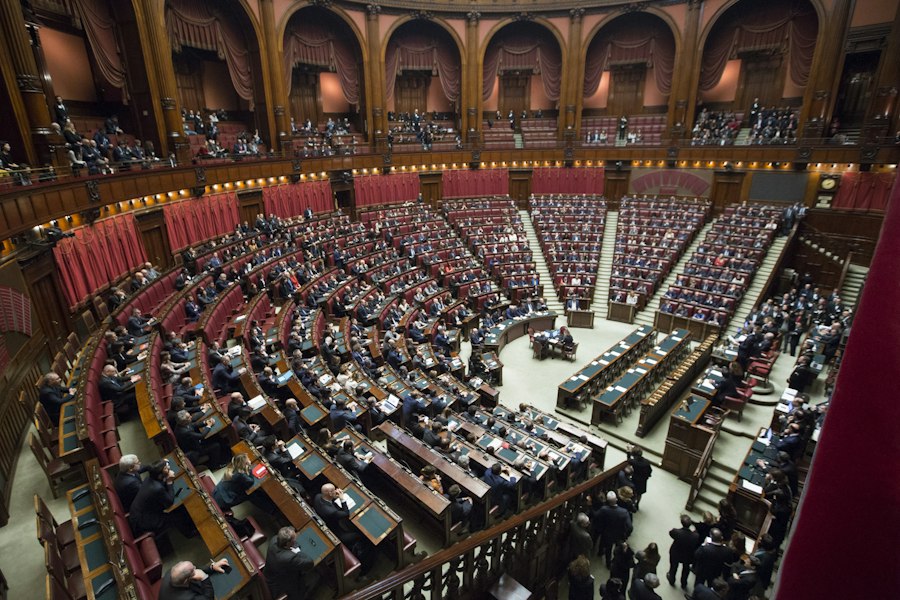
The United States' 14-point proposal, delivered to Tehran via Pakistan earlier in the week of May 5, 2026, represents an extraordinarily ambitious document — one that seeks to address not only the immediate military confrontation and the Strait of Hormuz crisis, but also the deep structural questions about Iran's nuclear programme that have haunted US-Iran relations for more than two decades. Understanding the full scope of what Washington is demanding — and what it is offering in return — is essential to assessing the prospects for any lasting agreement.
At the core of Washington's demands is an absolute prohibition on Iran ever developing a nuclear weapon. This is paired with a requirement that Tehran halt all uranium enrichment for a minimum period of twelve years — a moratorium that would fundamentally alter Iran's nuclear posture and leave it far more dependent on external suppliers for any future civilian nuclear energy needs. Crucially, the proposal goes further than simply suspending enrichment activities: it requires Iran to physically surrender its existing stockpile of uranium enriched to 60 percent purity — an estimated 440 kilograms, or approximately 970 pounds — material that, while still below weapons-grade (which requires 90 percent enrichment), represents a significant strategic asset and a source of considerable national pride for Iranian nuclear scientists and political figures alike.
The proposal also addresses the immediate crisis in the Strait of Hormuz. Both sides would agree to reopen the critical waterway within 30 days of signing any agreement — a provision that would provide immediate relief to global energy markets and to the Gulf states that have been severely impacted by the maritime standoff. In return, the United States has offered a package of economic incentives designed to be substantial enough to justify the political costs Iran would incur domestically by accepting the nuclear restrictions.
Those incentives include a graduated lifting of American sanctions — the punishing economic restrictions that have crippled the Iranian economy for years, dramatically reducing the country's oil export revenues, cutting off access to the international banking system, and fuelling inflation that has eroded the purchasing power of ordinary Iranians. Washington has also offered to release billions of dollars in frozen Iranian assets — funds that have been held in overseas accounts since the sanctions regime tightened — and to withdraw the US naval blockade of Iranian ports, which has further strangled Iran's already beleaguered economy during the period of active hostilities.
It is important to contextualise this proposal within the broader arc of American demands at the outset of the conflict. When the United States first articulated its war objectives in the immediate aftermath of the February strikes, the list was considerably more expansive: Washington called for the complete destruction of Iran's ballistic missile capabilities, the dismantling of its navy, the severance of all support to armed proxy groups across the region, and an absolute guarantee that Iran would never obtain nuclear weapons. A 15-point proposal delivered in late March went even further, calling explicitly for the dismantling of nuclear facilities at Natanz, Isfahan, and Fordow — the heart of Iran's nuclear industrial complex — and the permanent, unconditional prohibition of weapons-grade enrichment.
The May proposal, by contrast, represents a significant moderation of US demands. US Secretary of State Marco Rubio's briefings in early May suggested what analysts described as a sharp departure from Washington's initial position — an implicit, if unstated, acknowledgment that achieving all of America's maximalist war aims was not politically or militarily realistic. The question now is whether this moderated offer will be sufficient to bridge the yawning gap between the two sides' positions — and whether the Iranian leadership, scarred by conflict but still fundamentally intact, has both the political will and the domestic latitude to accept it.
"If there is anything the Iranians are going to insist upon in these negotiations, it is their right to enrich uranium to the 3.67 percent level, which is allowed under nuclear non-proliferation treaties."
— Mark Kimmitt, Former US Assistant Secretary of StateIran's Nuclear Red Lines: Non-Negotiable Sovereignty or Calculated Flexibility?
No issue is more central to the Iran-US standoff — and no issue is more likely to determine whether a sustainable deal is achievable — than the question of uranium enrichment. Iran's nuclear programme is not merely a strategic asset or a security deterrent; it is, for a significant segment of the Iranian political establishment and public, a symbol of scientific achievement, technological sovereignty, and national dignity. The Islamic Republic has invested enormous resources and endured extraordinary international pressure to develop its enrichment capabilities, and any deal that requires the permanent abandonment of those capabilities will face intense domestic opposition within Iran.
Al Jazeera's correspondent reporting from Tehran has described Iran's nuclear enrichment programme as a "non-negotiable" red line in the current negotiations. Iranian officials and analysts across the political spectrum have consistently maintained that Tehran will not agree to a permanent suspension of enrichment, particularly one that lasts for twelve or more years. The 2015 Joint Comprehensive Plan of Action (JCPOA) — the landmark nuclear deal negotiated under the Obama administration — had permitted Iran to continue enrichment at low levels, capping it at 3.67 percent purity and imposing stringent inspection and verification requirements. That deal, widely regarded in Iran as a major concession, was unilaterally abandoned by President Trump in 2018 during his first term, after which Iran progressively escalated its enrichment activities far beyond the JCPOA's limits.
As of the current negotiations, Iran is believed to possess a stockpile of approximately 440 kilograms of uranium enriched to 60 percent purity — a level that places it significantly closer to weapons-grade material than the JCPOA ever permitted. A 90 percent threshold is generally required for weapons-grade uranium, meaning Iran's current stocks would require further enrichment to become directly usable in a nuclear device. Nevertheless, the accumulated technical knowledge, the centrifuge infrastructure, and the enriched uranium stockpile collectively represent a formidable hedge — a breakout capability that US and Israeli intelligence agencies have consistently identified as a major proliferation risk.
Iran's position in the current talks appears to be one of firm resistance to the complete suspension of enrichment while showing greater willingness to discuss oversight and verification measures. Former US Assistant Secretary of State Mark Kimmitt has publicly stated that the American demand for total enrichment cessation is unrealistic and unlikely to be accepted, noting that Iran's right to enrich at 3.67 percent for civilian purposes is protected under the Nuclear Non-Proliferation Treaty. Even the 2015 JCPOA, which was considered a considerable achievement for Western nonproliferation goals, did not demand zero enrichment — a fact that makes the current US position appear, to many observers, as a maximalist negotiating posture rather than a serious baseline for agreement.
Iran's response to the US proposal, transmitted via Pakistan on May 10, focuses on what Iranian state media describes as a "first stage" of negotiations centred on ending hostilities and addressing maritime security in the Gulf and the Strait of Hormuz — conspicuously placing the nuclear question at a later stage of the process. This sequencing is not accidental: it reflects Iran's consistent strategic calculation that agreeing to end the immediate military confrontation and reopen the Strait (thereby relieving some of the economic and military pressure) before addressing the nuclear file would give Tehran greater leverage in any subsequent nuclear negotiations. Iran is essentially asking the US to remove its most powerful pieces from the board before the most consequential game begins.
The challenge for the United States is that this sequencing carries its own risks. As the Axios news outlet reported in late April, lifting the blockade and formally ending the war would remove Washington's primary leverage in any future negotiations over Iran's enriched uranium stockpile and enrichment suspension — two of Trump's stated primary war objectives. Accepting Iran's preferred sequence could mean trading away the military pressure that has been the chief driver of Iranian engagement in talks, in exchange for a limited framework deal that leaves the hardest questions unresolved.
- Iran holds an estimated 440 kg (970 lb) of uranium enriched to 60% purity.
- Weapons-grade uranium requires enrichment to 90%+ — Iran is technically capable of reaching this threshold.
- The 2015 JCPOA capped Iranian enrichment at 3.67% purity — a level Iran regards as the minimum for civilian nuclear energy purposes.
- The US proposal demands a halt to all enrichment for at least 12 years — a far more restrictive condition than the 2015 deal.
- Iran has operated centrifuge facilities at Natanz, Isfahan, and Fordow — facilities the US initially demanded be dismantled.
The Choke Point: Hormuz, Global Energy, and Iran's Ultimate Leverage

The Strait of Hormuz — that narrow, strategically vital passage between the Persian Gulf and the Gulf of Oman — has long been described as the jugular vein of the global energy system. At its narrowest point, the strait measures just 39 kilometres (24 miles) across, yet through it flows approximately 20 percent of the world's oil supply and a significant proportion of its liquefied natural gas. Before Iran's de facto closure of the waterway following the February 2026 military strikes, roughly 17 to 19 million barrels of crude oil per day transited through the strait, along with enormous volumes of petroleum products and LNG bound for Asia, Europe, and global commodity markets.
When Iran moved to close the strait — through a combination of naval patrols, mines, and interdiction operations against vessels attempting to navigate the passage — the impact on the global economy was immediate and severe. Oil prices surged dramatically, triggering inflation in energy-importing nations around the world. Gulf states, including Saudi Arabia, the United Arab Emirates, Bahrain, and Kuwait — already suffering from Iranian retaliatory strikes — found their export revenues throttled at precisely the moment they most needed them. Shipping companies diverted vessels to longer, costlier routes around Africa, driving up freight costs globally. The energy crisis was real, widespread, and accelerating.
For the United States, reopening the Strait of Hormuz has therefore become one of the central objectives of the entire conflict and negotiation process. Washington launched what it called "Project Freedom" — an operation deploying US naval forces to escort stranded ships out of the strait. The operation dramatically escalated tensions: the US military reported intercepting Iranian missiles and sinking Iranian small boats that interfered with escort operations. Iran, in turn, reported attacks on US naval vessels and continued to tighten its control over the waterway. The UAE reported attacks from Iranian forces. The strait became, in essence, a second active theatre of the broader conflict.
Trump ultimately paused "Project Freedom" after a request from Pakistan — the mediating power — citing what he described as "great progress" in talks with Iran. But the pause did not resolve the underlying standoff. Both Iran and the United States have maintained competing blockades in the strait, and skirmishes have continued even as ceasefire rhetoric has dominated the headlines. Iran has also moved to establish new protocols and mechanisms for controlling transit through the strait, asserting a degree of maritime sovereignty that goes considerably beyond what international law strictly permits — and that Washington and Gulf states regard as wholly unacceptable.
The sovereignty question over the Strait of Hormuz has, according to Al Jazeera correspondents reporting from Tehran, become one of the defining issues at the negotiating table. Iran appears to be seeking not merely the reopening of the strait, but some form of acknowledged role in governing access to it — a demand that the US and its Gulf allies have flatly rejected. The US-backed Gulf states, which bore the brunt of Iranian retaliatory strikes, have been insistent that navigation be fully restored without any conditions or Iranian veto power over transit.
The Iranian proposal transmitted on May 10 through Pakistan suggests that the first stage of any agreement will focus specifically on ending hostilities and establishing what Tehran calls "maritime security" in the Gulf and the Strait of Hormuz. This framing is significant: it positions the maritime question as separable from the nuclear question — potentially allowing the two sides to reach a limited agreement on the strait while deferring the far more contentious nuclear file to a later round of talks. Whether Washington will accept this sequencing, and what precise mechanisms for maritime governance Iran might be willing to accept, will be among the most consequential questions of the coming days and weeks.
"The sovereignty over the Strait of Hormuz is becoming one of the main issues on the negotiating table. We are seeing the Iranians tightening their control, setting new protocol, new mechanisms for controlling that strategic chokepoint for each vessel that passes through."
— Al Jazeera Correspondent, Reporting from TehranPakistan's Pivotal Role: The Unlikely Diplomatic Broker Between Washington and Tehran

Among the more remarkable diplomatic developments of the 2026 Iran-US conflict has been the emergence of Pakistan as the primary mediating power between Washington and Tehran. The choice of Pakistan as an intermediary — rather than the traditional Middle Eastern brokers like Oman, Qatar, or Turkey — reflects the particular challenges of this conflict's diplomatic landscape and Pakistan's unique positioning as a state that maintains functional, if complex, relationships with both the United States and the Islamic Republic of Iran.
Pakistan shares a long border with Iran and has deep historical, cultural, and religious ties with the Persian state. Islamabad also depends significantly on Washington for military assistance, diplomatic support, and economic relationships, including access to multilateral lending institutions. This dual positioning — simultaneously a neighbour and cultural cousin to Iran, and a longstanding if sometimes fraught security partner of the United States — makes Pakistan a plausible channel through which both parties can communicate without the direct engagement that neither side is currently willing to countenance publicly.
Pakistan's role has been active rather than merely passive. When Trump paused the "Project Freedom" naval escort operation in the Strait of Hormuz, he explicitly cited a request from Pakistan as a reason for the pause, alongside his assertion of "great progress" in negotiations. This public acknowledgment of Pakistan's influence was a significant validation of Islamabad's mediating role and a signal that the Trump administration genuinely values the channel. Pakistani diplomatic sources confirmed to Al Jazeera that Iran's formal response to the US proposal was transmitted to Washington through Pakistan on May 10 — confirming the channel's operational centrality to the negotiating process.
The mediation role also carries significant risks and responsibilities for Pakistan. If talks fail and the conflict escalates further, Pakistan's proximity to Iran and its role as intermediary could draw Islamabad into a confrontation it is ill-equipped to navigate. Conversely, if the talks succeed and a deal is reached, Pakistan stands to gain considerably in terms of international prestige, potential economic benefits, and its own strategic relationships in the region. Prime Minister's office sources in Islamabad have emphasised that Pakistan views its mediating role as a matter of regional stability as much as bilateral diplomacy — noting the devastating economic effects of the Hormuz closure on Pakistan's own import-dependent economy, including fuel and food supplies.
The timing of Iran's transmission of its response on May 10 — a Sunday — is itself notable. It comes just one week before US President Trump is scheduled to visit China, one of the largest importers of Iranian oil and a country with substantial strategic interests in seeing the Hormuz crisis resolved. Beijing has been applying quiet but persistent pressure on all parties to reach a negotiated settlement, and Trump's upcoming visit creates a deadline of sorts: reaching at least a framework agreement before the China trip would allow Trump to present a major diplomatic achievement to Beijing and to domestic audiences alike. Whether this timing is coincidental or calculated on Iran's part remains a matter of speculation, but it has certainly concentrated the minds of negotiators on both sides.
- Pakistan: Primary intermediary transmitting proposals between Washington and Tehran; border-sharing neighbour of Iran with complex ties to both parties.
- United States: Delivers 14-point proposal via Pakistan; seeking nuclear suspension, Hormuz reopening, and end to regional proxy activity.
- Iran: Transmits response on May 10 via Pakistani channel; focuses first stage on ending hostilities and Hormuz maritime security.
- China: Not a direct mediator but exerts significant background influence as the largest buyer of Iranian oil; Trump's upcoming Beijing visit adds urgency.
- Gulf States (UAE, Saudi Arabia, etc.): Not at the negotiating table but bear disproportionate consequences of the conflict; pressing for unconditional Hormuz reopening.
Sanctions, Frozen Assets, and the Economics of a Potential Deal

Beyond the military confrontation and the nuclear standoff, the economic dimension of the Iran-US negotiations is perhaps the most immediate driver of Iranian behaviour at the negotiating table. The Islamic Republic's economy has been subjected to layers of American sanctions for decades — restrictions that have been progressively tightened, relaxed, and retightened according to the shifting fortunes of diplomatic engagement and geopolitical confrontation. The cumulative effect has been devastating: oil revenues dramatically curtailed, access to international banking systems severed, inflation persistently elevated, and the purchasing power of ordinary Iranians eroded to a degree that has fuelled domestic unrest and political instability.
When President Trump withdrew the United States from the 2015 JCPOA nuclear agreement during his first term, he re-imposed a comprehensive sanctions regime that had been partially lifted under the deal, dealing a severe blow to the Iranian economy's brief recovery. The "maximum pressure" campaign dramatically reduced Iran's oil exports — from approximately 2.5 million barrels per day before the sanctions to as few as 300,000 to 500,000 barrels per day at the campaign's peak — and sent the Iranian rial into freefall. The economic pain was real and tangible for tens of millions of Iranians, even as the country's nuclear programme continued to expand in defiance of international pressure.
The US proposal on the table now offers Iran a significant package of economic relief: a gradual lifting of sanctions, the release of billions of dollars in frozen Iranian assets held in overseas accounts, and the withdrawal of the US naval blockade of Iranian ports — all of which would provide substantial and relatively rapid economic benefits. For the Iranian government, which must balance its geopolitical ambitions and ideological commitments against the material needs of its population and the stability of its own political position, these economic incentives are not trivial. Nothing, as analysts of Iranian domestic politics consistently note, motivates the clerical leadership in Tehran more acutely than threats to its grip on power — and an economy in freefall, particularly against the backdrop of the physical destruction wrought by the conflict, represents precisely such a threat.
The sequencing of sanctions relief has been a persistent sticking point in US-Iran negotiations. Iran has consistently demanded the full and immediate removal of all sanctions, particularly those re-imposed after the 2018 JCPOA withdrawal, while the United States has offered phased or conditional relief tied to verifiable compliance with nuclear restrictions. Key Iranian institutions, including the central bank and the national oil company, remain under terrorism-related sanctions — designations that Iran regards as gratuitously hostile and that the US has historically been reluctant to lift early in any negotiating process. The US offer of "gradual" sanctions relief in the current proposal therefore maps directly onto a point of contention that has derailed past negotiations.
The global economic dimension adds further urgency to the negotiations. The Hormuz closure has not merely hurt Iran's trading partners; it has inflicted real damage on the global economy, driving energy prices higher, disrupting supply chains, and creating inflationary pressures at a moment when many advanced economies were already navigating difficult post-pandemic recoveries. The International Energy Agency and major commodity trading houses have estimated that a prolonged closure of the strait could cost the global economy trillions of dollars in lost output. This creates an unusual alignment of interests among otherwise competing powers — China, the European Union, Japan, South Korea, and India all stand to benefit significantly from the strait's reopening, giving Tehran a degree of indirect diplomatic leverage that extends well beyond the bilateral US-Iran dynamic.
Iran clearly understands this leverage and is seeking to maximise the economic terms of any deal — demanding not merely sanctions relief and frozen asset releases, but also guarantees of what will happen if the United States once again walks away from an agreement, as it did in 2018. The lack of durable American commitment has been a persistent and legitimate grievance for Iranian negotiators, who point to the JCPOA's collapse as evidence that Washington cannot be trusted to honour its economic commitments over the long term. Any agreement that fails to address this concern — perhaps through UN Security Council guarantees, as Iran has reportedly requested, or through some form of escrow mechanism for economic benefits — risks being rejected or implemented only partially by a Tehran that has been burned before.
"Nothing motivates the clerical leadership in Iran more than threats to its grip on power. More than anything else, Iran seeks sanctions relief, without which its economy cannot recover."
— The Maritime Executive, Analysis Report, 2025Beyond Tehran and Washington: Regional Actors and the Architecture of a Post-War Order
The US-Iran confrontation of 2026 is not a bilateral drama unfolding in isolation; it is a conflict with tentacles stretching across the entire Middle East and with ramifications that reverberate through the global economic and strategic order. Any agreement — or failure to reach one — will reshape the political landscape of the region for years, if not decades, to come. Understanding who stands to gain and lose from the various possible outcomes is essential to grasping the full complexity of the situation.
The Gulf states — Saudi Arabia, the United Arab Emirates, Bahrain, Kuwait, and Qatar — have occupied a particularly difficult position throughout the conflict. These nations, many of which had developed cautiously improving relations with Iran over the preceding years as part of a broader regional realignment, found themselves targeted by Iranian retaliatory strikes following the February 28 attacks. The strikes damaged infrastructure, killed citizens, and created enormous domestic political pressure on Gulf governments that had, in some cases, quietly signalled ambivalence about the US-Israel military campaign against Iran. They now find themselves deeply invested in the outcome of negotiations: eager to see the Hormuz reopened, the military hostilities ended, and a new framework established that guarantees their security without requiring them to permanently choose between Washington and Tehran.
Lebanon, caught between Israeli military operations and the devastation of Hezbollah — Iran's most significant regional proxy force — faces a reconstruction challenge of historic proportions. The effective degradation of Hezbollah as a military actor, already underway before the 2026 conflict, has created a Lebanese political vacuum that regional and international actors are scrambling to fill. Syria's fragile transitional government, still navigating the aftermath of the Assad regime's collapse, watches developments in Iran with acute anxiety — knowing that a weakened or distracted Iran means the further erosion of whatever residual influence Tehran sought to maintain in Damascus. The broader "Axis of Resistance" — Iran's network of allied militias and movements across Iraq, Yemen, Lebanon, and the Palestinian territories — has been severely battered by the conflict, and any negotiated settlement will need to address the future configuration of Iran's regional proxy network.
China's role, while officially confined to the background, is of immense significance. Beijing is the largest importer of Iranian oil, and the Hormuz closure has disrupted Chinese energy supplies in ways that touch the core of the Chinese Communist Party's domestic priorities. China has a profound economic interest in seeing the strait reopened and the conflict resolved — and has been applying quiet diplomatic pressure on all parties accordingly. President Trump's scheduled visit to China in the week following May 10 creates a powerful deadline: reaching a framework agreement before that visit would allow Trump to present a geopolitical achievement to Beijing and demonstrate that American power can be deployed not merely to start conflicts but to end them on acceptable terms.
Russia, meanwhile, has watched developments with a complex mixture of interest and concern. On one hand, the Hormuz crisis has been, in narrow economic terms, beneficial for Moscow: with Iranian oil largely off the global market and Gulf exports disrupted, global oil prices have risen substantially, providing Russia — which has been under its own comprehensive Western sanctions regime since 2022 — with significantly enhanced energy export revenues. On the other hand, a prolonged Middle East conflict risks global economic disruption of a scale that could ultimately damage even Russia's commodity-export-dependent economy. Moscow's position in any post-conflict settlement architecture will depend heavily on whether Tehran and Washington reach a deal that diminishes or preserves Iranian-Russian strategic cooperation.
The longer-term implications for the nuclear non-proliferation regime deserve specific attention. If the negotiations result in Iran permanently forswearing nuclear weapons development — even if it retains some enrichment capabilities — it would represent a significant victory for the global nonproliferation architecture. If, on the other hand, the talks collapse and Iran uses the current crisis to further accelerate its enrichment programme and advance toward weapons capability, the consequences for regional proliferation dynamics could be severe: Saudi Arabia, Turkey, and potentially Egypt have all signalled, in various ways, that an Iranian nuclear weapon would likely trigger their own nuclear development programmes. The stakes of the current negotiations therefore extend far beyond the immediate fate of the US-Iran relationship.
The Path Forward: Scenarios, Obstacles, and the Fragile Prospect of Peace

With Iran's response to the US proposal now formally transmitted to Washington through Pakistan, the diplomatic process enters its most consequential and unpredictable phase. The content of Iran's response — described by Iranian state media as proposing a first stage focused on ending hostilities and establishing "maritime security" in the Gulf and the Strait of Hormuz — suggests that Tehran has not rejected the US proposal outright, but has substantially reformulated its terms, particularly with respect to the sequencing of the nuclear question. The coming days will reveal whether this reformulation is a basis for further negotiation or a diplomatic dead end.
Three broad scenarios appear plausible. In the most optimistic scenario, both sides accept the sequenced approach that Iran has proposed — beginning with a formal end to hostilities and a framework agreement on Hormuz, with nuclear talks to follow in a second stage. This would allow both parties to claim a form of victory: the US would have ended the immediate military conflict and reopened one of the world's most critical waterways; Iran would have avoided committing to nuclear concessions upfront and would begin receiving economic relief. The risk of this scenario is significant, however: once the military pressure is removed and the economic relief begins flowing, Iran's incentive to make difficult nuclear concessions in the second stage may diminish substantially.
In a second scenario, the two sides reach a comprehensive "big deal" — addressing the nuclear file, the Strait of Hormuz, sanctions, and frozen assets in a single integrated agreement. This would be the most durable and strategically significant outcome, but it would also be the hardest to achieve. The gaps between US and Iranian positions on the nuclear question remain profound, and the domestic political constraints on both sides make large, visible concessions extraordinarily difficult. Trump has staked his political credibility on achieving major Iranian concessions on nuclear issues; Iran's new leadership cannot be seen to capitulate on what it describes as a non-negotiable sovereign right. A comprehensive deal is possible in theory but would require extraordinary political will and probably a significant further evolution of both parties' stated positions.
In the third and most troubling scenario, the talks stall, the ceasefire breaks down, and the military confrontation resumes with renewed intensity. This outcome becomes more likely if Washington rejects Iran's proposed sequencing, reasserts its maximalist demands on the nuclear file, and moves to reimpose the full spectrum of military pressure. Iran's military has warned of "surprising methods of warfare" if attacked again — a phrase that analysts interpret as a reference to asymmetric capabilities, including cyber operations, attacks on Gulf infrastructure, and potential moves to further escalate in the Strait of Hormuz. A return to active conflict would be catastrophic for all parties — but the history of US-Iran relations is replete with moments where catastrophic outcomes were nevertheless realised.
What appears most likely in the immediate term is a period of intense back-and-forth diplomacy, mediated through Pakistan, in which both sides attempt to find the precise formulation of a first-stage agreement that each can accept domestically. The Wall Street Journal has reported that one idea under active discussion is a 12-to-15-year moratorium on enrichment before allowing Iran to resume at the 3.67 percent civilian level — a compromise that stops short of the permanent zero-enrichment demand while exceeding the limits of the 2015 JCPOA. Whether this or some similar compromise can bridge the gap between the two parties remains the central diplomatic question of the moment.
What is clear, as of May 10, 2026, is that the situation remains extraordinarily fluid, the stakes are among the highest in the recent history of international relations, and the consequences of failure — for the people of Iran, for the stability of the Middle East, and for the global economy — would be profound and far-reaching. The world is watching, and the next chapter of this story is yet to be written.
- Scenario A — Phased Deal: Iran and the US agree on a first stage addressing the Hormuz and end of hostilities, with nuclear talks deferred to a later phase. Quickest path to a ceasefire; carries long-term risks of losing US leverage.
- Scenario B — Comprehensive Agreement: Both sides bridge the nuclear gap and reach an integrated deal covering enrichment, Hormuz, sanctions, and frozen assets. Most durable outcome; hardest to achieve given current gaps.
- Scenario C — Collapse and Escalation: Talks fail, ceasefire breaks down, and conflict resumes. Worst-case outcome for all parties, but not historically unprecedented in US-Iran relations.
"They want to make a deal. We've had very good talks over the last 24 hours, and it's very possible that we'll make a deal."
— President Donald Trump, Oval Office, May 7, 2026

.png)


0 Comments