
Official Analysis • United States Government
Introduction: The Architect of American Energy Policy

In the complex, ever-shifting landscape of American governance, few positions carry as much weight — or as little public recognition — as the United States Secretary of Energy. As the head of the Department of Energy (DOE), one of the fifteen Cabinet-level departments of the federal government, the Secretary stands at the intersection of national security, technological innovation, economic policy, and environmental stewardship. The scope of the role is staggering in its breadth: from safeguarding the nation's nuclear weapons arsenal, to funding cutting-edge scientific research at seventeen national laboratories, to shaping the energy mix that powers American homes, businesses, and military installations alike.
The position was formally established on October 1, 1977, when President Jimmy Carter signed the Department of Energy Organization Act into law, consolidating a patchwork of federal energy agencies into a single, unified department. Yet the origins of the role stretch back much further, to the Manhattan Project of the 1940s and the Cold War nuclear programs that defined American geopolitical strategy for generations. Today, the Secretary of Energy is not merely a bureaucratic administrator — the Secretary is a strategic policymaker, a scientific patron, a national security advisor, and a voice in global energy diplomacy.
The Department of Energy's annual budget hovers around fifty billion dollars, making it one of the most generously funded agencies in the federal government. It employs approximately fourteen thousand federal workers and contracts with an additional ninety-five thousand individuals across an intricate web of national laboratories, test facilities, cleanup sites, and research centers. The Secretary oversees this entire enterprise, while simultaneously advising the President on matters ranging from the price of gasoline at American filling stations to the strategic readiness of the United States nuclear deterrent.
The Secretary of Energy is the fifteenth in the presidential line of succession, a detail that underscores the strategic gravity of the position. In a worst-case scenario of national catastrophe, the Secretary of Energy would become one of the final stewards of the American state — a sobering reminder that this office is not merely about kilowatts and carbon emissions, but about the very continuity of the republic. The individual who holds this title must therefore be not just a policy wonk or an industry executive, but someone capable of navigating the most consequential decisions in the history of civilization.
The Secretary of Energy advises the President on energy policy and guides energy and nuclear weapons production initiatives — requiring the ability to think long-term and make strategic decisions, sometimes with incomplete information.
The role has evolved dramatically since its inception. During the Cold War, the Secretary's primary concern was the maintenance of America's nuclear arsenal and the proliferation of atomic technology. As the geopolitical landscape shifted in the 1990s, attention turned toward radioactive waste disposal, environmental cleanup from decades of weapons production, and the development of more efficient civilian energy sources. In the twenty-first century, the agenda has expanded once more: climate change, energy independence from foreign suppliers, the buildout of renewable infrastructure, the digital transformation of the grid, and the renaissance of nuclear power have all crowded the Secretary's desk. Today, as Secretary Chris Wright shapes policy under President Donald Trump's second administration, the office finds itself at the center of fierce national debates about what energy future America should pursue.
This article offers a thorough, section-by-section examination of the United States Secretary of Energy: its history and founding, the scope of its responsibilities, the remarkable individuals who have held the post, and the defining challenges that will shape the role in the decades to come. It is, at its core, a story about power — not just the electrical kind.
From the Manhattan Project to the Modern Department: A History of Origins

To understand the Secretary of Energy, one must first understand the historical crucible from which the Department itself emerged. The story begins not in peacetime policy debates, but in the shadow of war — specifically, in a letter dated August 2, 1939, in which the physicist Albert Einstein wrote to President Franklin D. Roosevelt warning that recent advances in nuclear chain reactions might make possible the construction of "extremely powerful bombs" of a new type. Roosevelt, recognizing the strategic implications, initiated a federal research program that would ultimately become the most ambitious scientific endeavor in human history: the Manhattan Project.
Launched formally in 1942 under the auspices of the Army Corps of Engineers, the Manhattan Project employed over 130,000 scientists, engineers, and workers at sites scattered across the United States, from Oak Ridge, Tennessee, to Los Alamos, New Mexico, to Hanford, Washington. The project successfully produced and detonated the first nuclear weapons, culminating in the atomic bombings of Hiroshima and Nagasaki in August 1945 that ended World War II. The immense scientific infrastructure built for the project — national laboratories, research facilities, production complexes — would become the foundation upon which all subsequent American energy governance was constructed.
After the war, the strategic importance of nuclear technology was unquestioned, but the question of who should control it was deeply contested. In 1946, the Atomic Energy Act transferred responsibility for nuclear research and development from the military to a new civilian agency: the Atomic Energy Commission (AEC), led by five presidentially appointed commissioners. The AEC's charter ensured continuity of the Manhattan Project's research activities, even as the nation transitioned to peacetime purposes. Throughout the late 1940s and 1950s, the AEC created a network of national laboratories to host particle accelerators, isotope-separating centrifuges, and other large-scale scientific instruments that became the foundation of American nuclear science and technology leadership.
Albert Einstein warns President Roosevelt of the possibility of nuclear weapons, initiating federal nuclear research programs.
The Army Corps of Engineers establishes the Manhattan Engineer District, building the infrastructure that will underpin American energy governance for decades.
The AEC is established as a civilian agency to control peacetime nuclear research, inheriting the Manhattan Project's nationwide network of laboratories and facilities.
The 1973 OPEC oil embargo forces a reckoning with American energy dependence. Congress expands federal energy research programs and splits the AEC into the Nuclear Regulatory Commission and the Energy Research and Development Administration.
President Jimmy Carter signs the Department of Energy Organization Act on August 4, 1977. The DOE begins operations on October 1, consolidating the Federal Energy Administration, the Energy Research and Development Administration, the Federal Power Commission, and programs from numerous other agencies.
The National Nuclear Security Administration is created as a semi-autonomous agency within DOE, centralizing responsibility for the military application of nuclear science.
Energy entrepreneur and Liberty Energy CEO Chris Wright is confirmed by the Senate 59–38, becoming the 17th Secretary of Energy under President Trump's second administration.
The 1973 OPEC oil embargo was a watershed moment that dramatically accelerated the creation of a dedicated federal energy department. When Arab members of the Organization of the Petroleum Exporting Countries cut off oil exports to the United States in response to American support for Israel during the Yom Kippur War, gasoline prices quadrupled and long lines formed at filling stations across the country. The crisis exposed, in visceral terms, the vulnerability of an economy built on cheap imported petroleum. President Nixon and Congress responded by expanding domestic energy research programs and reorganizing the federal energy bureaucracy. By 1974, the AEC had been split into the Nuclear Regulatory Commission (charged with civilian reactor oversight) and the Energy Research and Development Administration (charged with nuclear weapons and energy development programs).
President Jimmy Carter, who took office in January 1977, moved quickly to consolidate this fragmented landscape. Carter — himself a nuclear engineer who had served in the Navy's early nuclear submarine program under Admiral Hyman Rickover — understood energy issues with rare technical depth. On August 4, 1977, he signed the Department of Energy Organization Act, establishing the Department of Energy and creating the position of Secretary of Energy. The new department began operations on October 1 of that year, consolidating the Federal Energy Administration, the Energy Research and Development Administration, the Federal Power Commission, and programs from numerous other agencies under a single organizational roof. For the role of first Secretary, Carter made a historically unusual choice: he nominated James Schlesinger, a Republican who had previously served as Secretary of Defense under Presidents Nixon and Ford. Schlesinger's appointment remains the only instance in American history of a president choosing a member of the opposing political party for the position of Energy Secretary.
The early Department of Energy was shaped by the twin imperatives of Carter's energy agenda: conservation and independence. Carter famously wore a cardigan sweater during a nationally televised address urging Americans to turn down their thermostats, and he installed solar panels on the roof of the White House. The DOE's mandate included promoting energy conservation, developing alternative energy sources, managing the nation's nuclear weapons complex, and reducing dependence on foreign oil. These foundational priorities — energy security, technological innovation, nuclear stewardship — continue to define the department's mission nearly five decades later, even as the specific policies and political emphases shift with each new administration.

From Carter's initial vision of a conservation-focused, technology-driven energy future, the department's trajectory has zigzagged with the political winds. Reagan-era Secretaries reduced emphasis on renewable energy and restored primacy to nuclear weapons programs. Clinton's Secretaries — including Hazel O'Leary, the first woman and first African American to hold the position, and Federico Peña, the first Hispanic — grappled with post-Cold War nuclear cleanup and the challenge of reimagining a department whose primary raison d'être had been weapons production. The George W. Bush era saw a renewed focus on energy independence through domestic production, while the Obama administration's Secretaries, including Nobel Prize-winning physicist Steven Chu, pushed aggressively toward clean energy and climate mitigation. The Trump, Biden, and current Trump administrations have each reshaped the department's priorities yet again, reflecting the enduring tensions in American energy politics between fossil fuels and renewables, between economic growth and environmental protection, between national security and international cooperation.
Roles, Responsibilities, and the Reach of the Office
The role of the United States Secretary of Energy is, in the words of the Department itself, one of the most varied and consequential in the entire federal government. The Secretary is simultaneously a Cabinet official who advises the President, an executive who manages one of the government's largest and most complex organizations, a steward of America's nuclear deterrent, a patron of basic scientific research, and a policymaker who shapes the energy landscape of the world's largest economy. Understanding the full scope of the Secretary's responsibilities requires examining each of these dimensions in turn.
At the most fundamental level, the Secretary of Energy is the head of the Department of Energy, responsible for the overall management, direction, and performance of an organization with a budget of roughly fifty billion dollars and a workforce — including contractors — of nearly one hundred and ten thousand people. This administrative role is substantial in itself: the Secretary must oversee the DOE's financial management, human capital strategy, information technology systems, procurement processes, and organizational culture. The department operates facilities across the country, including massive national laboratories, nuclear weapons production and testing sites, radioactive waste cleanup operations, and a network of energy research and demonstration projects. Coordinating all of this requires executive skill of a high order.
Core Responsibilities of the Secretary of Energy
- Nuclear SecurityOversight of the National Nuclear Security Administration (NNSA) and maintenance of the U.S. nuclear stockpile
- Energy PolicyAdvising the President on energy policy, setting strategic direction for domestic energy production and conservation
- Science ResearchManagement of 17 national laboratories and sponsorship of more physical science research than any other federal agency
- Grid SecurityAuthority to issue emergency orders to protect the reliability and security of the national electrical grid
- Environmental CleanupOverseeing remediation of radioactive contamination from Manhattan Project and Cold War weapons activities
- Naval Nuclear PowerResponsibility for the Naval Nuclear Propulsion Program powering U.S. Navy vessels
- International AffairsLeading U.S. engagement on nuclear nonproliferation, arms control, and global energy partnerships
- Cabinet AdvisorServing as 15th in the presidential line of succession and member of the National Security Council
Perhaps the Secretary's most consequential and least-publicized responsibility is oversight of the National Nuclear Security Administration (NNSA), a semi-autonomous agency within the DOE that Congress established in 2000. The NNSA's mission is to enhance national security through the military application of nuclear science. Its core functions include designing and maintaining a safe, secure, and reliable nuclear weapons stockpile; providing nuclear propulsion for the United States Navy; combating nuclear proliferation and terrorism; and responding to nuclear and radiological incidents worldwide. Since the Manhattan Project in the 1940s, the DOE and its predecessor agencies have held the sole responsibility in the U.S. government for the design and delivery of nuclear weapons — a mission that continues under the Secretary's watch. The NNSA's three primary weapons laboratories — Los Alamos National Laboratory in New Mexico, Lawrence Livermore National Laboratory in California, and Sandia National Laboratories in New Mexico and California — employ thousands of scientists and engineers who use the world's fastest supercomputers, powerful lasers, and other advanced technologies to simulate nuclear weapons performance without the need for underground testing.
The Secretary's role in nuclear stewardship is not merely technical but profoundly strategic. The nuclear stockpile must be maintained in a state of perpetual readiness while simultaneously meeting the overarching objectives of providing no new military capabilities, conducting no underground nuclear tests, and contributing to U.S. nonproliferation goals. The nation's nuclear weapons are aging beyond their original design lives, requiring life-extension programs that preserve safety and effectiveness without the benefit of actual testing. The Secretary, working in close coordination with the Department of Defense, must navigate these complex technical and policy challenges while managing the political pressures that inevitably attend all things nuclear.
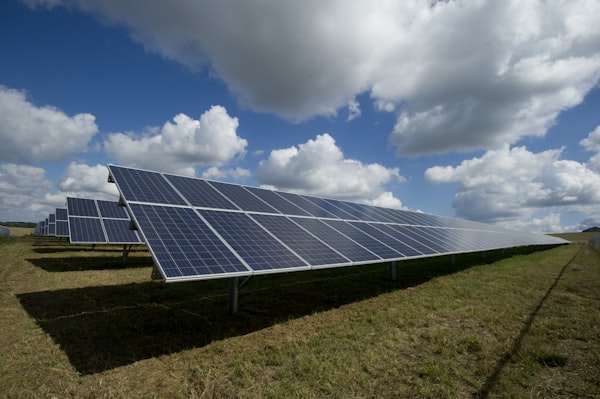
Beyond nuclear weapons, the Secretary's responsibilities encompass the full spectrum of energy production and policy. The DOE sponsors more research in the physical sciences than any other federal agency — the majority conducted through its national laboratory system. These seventeen laboratories, which include world-renowned institutions such as Argonne, Brookhaven, Fermilab, Oak Ridge, and the National Renewable Energy Laboratory, conduct fundamental and applied research across a staggering range of fields: particle physics, materials science, climate modeling, battery technology, carbon capture, artificial intelligence, quantum computing, and much more. The Secretary sets strategic research priorities for this vast enterprise, channeling federal investment toward areas of greatest scientific promise and national need.
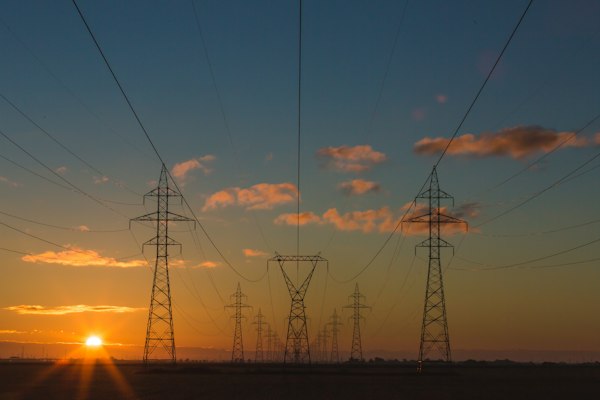
The Secretary also holds direct authority over the security and reliability of the nation's electrical grid. Under the Federal Power Act, the Secretary can issue emergency orders requiring electricity suppliers and transmission owners to take action to prevent or mitigate a grid reliability emergency. Secretary Chris Wright exercised this authority dramatically in May 2025, when he ordered two generating units at the Eddystone Generating Station in Pennsylvania to remain online past their planned retirement date to prevent blackouts in the PJM regional grid during summer heat waves. This kind of direct intervention in energy markets — normally governed by state public utility commissions and the Federal Energy Regulatory Commission — illustrates the extraordinary reach of the Secretary's authority when national energy security is at stake.
The Secretary of Energy also carries substantial responsibilities in the realm of international affairs. The DOE maintains an extensive network of international partnerships related to nuclear security, energy technology development, and climate policy. The Secretary represents the United States in negotiations over nuclear arms control and nonproliferation, working with counterparts in Russia, China, and other nuclear powers. The department's work in securing nuclear materials around the world — removing highly enriched uranium from vulnerable locations, detecting illicit nuclear trafficking, and building partner-nation capacity for nuclear security — is a critical but little-publicized contribution to global stability. In the realm of energy diplomacy, the Secretary engages with foreign governments and international organizations on matters ranging from oil market stability to the global deployment of clean energy technologies, from the rules governing liquefied natural gas exports to the standards that will govern international nuclear commerce.
Finally, the Secretary is responsible for overseeing the ongoing environmental cleanup legacy of the Manhattan Project and Cold War. Decades of nuclear weapons research and production left behind massive contamination at sites across the United States — from the Hanford Site in Washington State, where 56 million gallons of radioactive waste are stored in underground tanks, to former production facilities in Ohio, Kentucky, Tennessee, and elsewhere. The DOE's Office of Environmental Management has been working for decades to remediate this contamination, and the task will stretch well into the second half of the twenty-first century at a total estimated cost of hundreds of billions of dollars. The Secretary must balance urgency and prudence in this cleanup work, protecting public health and the environment while managing costs and respecting the communities near these legacy sites.
Profiles in Leadership: Notable Secretaries of Energy

Over nearly five decades, seventeen individuals have held the office of United States Secretary of Energy. Each brought a unique background, set of priorities, and leadership style to the role, leaving a distinct mark on the department's trajectory. Examining the careers of the most consequential Secretaries offers a window into the evolving meaning of the position and the enduring tensions at its heart.
James Schlesinger (1977–1979), the first and only Secretary to be dismissed from the position, was a formidable intellectual who had previously served as Director of Central Intelligence and Secretary of Defense. Schlesinger was chosen by Carter despite being a Republican — a bipartisan gesture reflecting the president's belief that energy policy transcended partisan politics. Schlesinger threw himself into the organizational challenge of standing up the new department, consolidating dozens of disparate programs and agencies into a coherent structure. He was deeply committed to the view that the United States faced a genuine energy crisis requiring immediate, dramatic action — including mandatory conservation measures, price controls, and massive public investment in alternative energy. His forceful personality and resistance to compromise ultimately led to his dismissal by Carter in 1979, but his foundational work in establishing the department's organizational architecture has endured.
Hazel O'Leary (1993–1997) brought a historic set of firsts to the position: she was the first woman and the first African American to serve as Secretary of Energy. A lawyer and energy executive who had spent years at Northern States Power Company, O'Leary came to office with a reforming agenda. Her most lasting contribution was her decision to declassify thousands of documents about Cold War-era nuclear weapons tests and radiation experiments — including experiments conducted on human subjects without their full knowledge or consent. This unprecedented act of transparency shocked the public and provoked heated criticism from within the national security establishment, but it established an important precedent for governmental accountability in the nuclear realm. O'Leary also worked to diversify the DOE's workforce and broaden access to the department's contracting opportunities.
Steven Chu (2009–2013) stands as perhaps the most scientifically distinguished Secretary in the department's history. A professor at Stanford University and co-director of Lawrence Berkeley National Laboratory, Chu won the 1997 Nobel Prize in Physics for his work on cooling and trapping atoms with laser light — making him the first Nobel laureate to join the presidential Cabinet. Obama chose Chu specifically because of his deep expertise in energy science and his conviction that clean energy technology was both a climate imperative and an economic opportunity. Chu oversaw the massive deployment of Recovery Act funds into clean energy — grants and loans that catalyzed dramatic cost reductions in solar photovoltaics and lithium-ion batteries — and he was also the longest-serving Secretary in the department's history. His tenure coincided with the Deepwater Horizon disaster in 2010, during which Chu played a hands-on technical role in the effort to stop the oil spill, applying his scientific knowledge directly to one of the worst environmental catastrophes in American history.
Ernest Moniz (2013–2017), who succeeded Chu, was another physicist and MIT professor, and he brought particular expertise in nuclear energy and international nuclear negotiations. Moniz was a key technical advisor in the negotiations that produced the 2015 Joint Comprehensive Plan of Action (JCPOA) with Iran, helping to craft the agreement's complex technical provisions on uranium enrichment, centrifuge limitations, and inspection protocols. His detailed knowledge of nuclear fuel cycles and enrichment technology was credited with making the agreement more technically robust than it might otherwise have been. Moniz also championed natural gas as a bridge fuel to a lower-carbon energy system — a position that placed him at odds with some environmental advocates but reflected his pragmatic assessment of the energy transition's timeline and costs.
Chris Wright is a dedicated humanitarian with a passion for bringing the benefits of energy to every community in the world. This passion has inspired a career in energy, working not only in oil and gas but nuclear, solar, and geothermal.
Jennifer Granholm (2021–2025), who served under President Biden, was the second woman to hold the position and the first former state governor. As Governor of Michigan from 2003 to 2011, Granholm had presided over the collapse and partial recovery of the state's auto industry, giving her practical experience with the economic dimensions of energy and manufacturing transitions. Under Granholm, the DOE administered unprecedented levels of investment in clean energy through the Bipartisan Infrastructure Law and the Inflation Reduction Act, channeling tens of billions of dollars into electric vehicle charging infrastructure, clean hydrogen, carbon capture, offshore wind, and advanced nuclear reactors. Granholm was an outspoken advocate for clean energy and climate action, and her tenure represented the most aggressive federal push toward decarbonization in the department's history.
Chris Wright, who became the 17th Secretary of Energy on February 4, 2025, represents a sharp departure from his predecessor's priorities. Wright, born in 1965 and raised in Colorado, earned a degree in mechanical engineering from MIT and completed graduate work in electrical engineering at the University of California-Berkeley and MIT. In 1992, he founded Pinnacle Technologies, a company that helped pioneer commercial shale gas production through hydraulic fracturing. He later founded Liberty Energy, a Denver-based energy company specializing in fracking services, and served as its CEO for over a decade. Wright also sits on the board of Oklo, a Silicon Valley-based developer of small modular nuclear reactors. His self-description as an "energy nerd turned entrepreneur" reflects his focus on practical energy deployment rather than policy advocacy. Wright has emphasized American energy dominance, the expansion of all forms of affordable and reliable energy, and the importance of fossil fuels alongside nuclear, geothermal, and renewable sources — a multiresource strategy that contrasts with the Biden administration's singular focus on decarbonization.
Challenges of the Present and the Future of the Office

As the United States navigates a period of profound transformation in its energy system — driven by the growth of intermittent renewables, the electrification of transportation and industry, surging electricity demand from data centers and AI infrastructure, and the geopolitical pressures reshaping global energy markets — the Secretary of Energy faces a set of challenges that are simultaneously unprecedented in their complexity and urgently in need of resolution.
The first and perhaps most pressing challenge is the management of surging electricity demand. For two decades after the turn of the millennium, American electricity consumption was essentially flat, as efficiency gains offset modest growth in end uses. That era is now definitively over. The explosion of energy-intensive data centers to power artificial intelligence applications, the rapid adoption of electric vehicles, the electrification of home heating and industrial processes, and the return of domestic manufacturing all point toward dramatically higher electricity demand in the coming decades. The PJM Interconnection, which manages the electric grid for thirteen Mid-Atlantic and Midwest states, has warned of mounting resource adequacy concerns — a risk that Secretary Wright addressed directly with his emergency order to keep the Eddystone Generating Station units running beyond their planned retirement dates. Managing this demand surge while keeping electricity affordable and reliable will require the Secretary to coordinate across regulatory agencies, utilities, state governments, and private investors in ways that test the limits of federal authority.
Nuclear energy represents both a major opportunity and a major challenge for the Secretary. After decades of stagnation, there is genuine and growing bipartisan enthusiasm for nuclear power as a reliable, low-carbon source of electricity. Small modular reactors (SMRs), next-generation reactor designs that promise lower costs and greater flexibility than traditional large-scale plants, are attracting significant private investment and government support. The DOE has backed the development of SMRs through its Advanced Reactor Demonstration Program, supporting companies like X-energy and TerraPower. Oklo, on whose board Secretary Wright served, is also developing a compact fast reactor. The challenge is translating this enthusiasm into operating reactors on a commercially viable timeline — something the American nuclear industry has struggled to accomplish in recent decades. The construction of the Vogtle units in Georgia, supported by DOE loan guarantees, came in years late and billions over budget, illustrating the formidable obstacles still facing nuclear development in the United States.
The nuclear weapons mission continues to evolve and intensify under Secretary Wright's watch. The United States is in the midst of a comprehensive modernization of its nuclear forces — including the B61-12 gravity bomb, the W87-1 warhead for land-based missiles, and the W93 warhead for submarine-launched missiles — that will consume a substantial share of the NNSA's budget for decades to come. Meanwhile, the geopolitical context for this modernization is becoming more complex: Russia has increased the salience of nuclear threats in its rhetoric and its military doctrine, China is rapidly expanding its nuclear arsenal, and North Korea continues to develop and test increasingly capable nuclear delivery systems. The Secretary must oversee the technical modernization while contributing to the broader strategic debate about the role of nuclear weapons in American national security policy and arms control diplomacy.
Environmental cleanup remains a multi-generational obligation that demands constant attention and resources. The Hanford Site in Washington State represents the most complex cleanup challenge in the department's history: decades of plutonium production for nuclear weapons left behind 56 million gallons of radioactive and chemically hazardous waste stored in underground tanks, some of which have leaked into the soil and groundwater. The DOE has been working since the late 1980s to design and build a treatment plant to vitrify this waste — turning it into stable glass logs for permanent storage — but the project has been plagued by technical difficulties, cost overruns, and delays. Similar cleanup challenges exist at dozens of other former weapons sites around the country. The Secretary must ensure that this cleanup work proceeds with appropriate urgency while managing the extraordinary costs and technical risks involved.
The global energy transition also poses profound questions for the Secretary's role in international affairs. The deployment of clean energy technologies — solar panels, wind turbines, batteries, electric vehicles — has created new supply chain dependencies on minerals like lithium, cobalt, nickel, and rare earth elements, much of which are currently mined and processed in China. The Secretary must work with counterparts in the Departments of State, Commerce, and Defense, as well as with allied governments, to develop more resilient and diversified critical mineral supply chains. The DOE has launched programs to support domestic mineral processing and the development of alternative sources, but building truly resilient supply chains will take years and require sustained diplomatic and economic effort. At the same time, the Secretary must engage with energy-importing nations in the developing world that are seeking affordable, reliable electricity to power their economic development — a challenge that requires balancing climate goals with development imperatives in a way that is both honest and effective.
The only way you can drive down the price of a critical commodity is to grow the supply — I am 100% committed to growing our electricity grid and our energy production and removing those barriers that are standing in the way.
Perhaps the deepest long-term challenge facing the Secretary of Energy is the question of how the United States will balance competing energy values in a world of accelerating change. The tension between affordable and reliable energy on the one hand, and clean and sustainable energy on the other, has been a defining fault line in American energy politics since at least the 1970s. Different administrations have resolved this tension differently — some emphasizing fossil fuel production and energy independence, others emphasizing clean energy and climate protection — but neither approach has fully resolved the underlying tension. The Secretary of Energy, whoever holds the position, must navigate this tension not in the abstract but in the concrete: in decisions about which research programs to fund, which technologies to back with loan guarantees, which grid emergencies to address with federal authority, and which international partnerships to pursue. These decisions, multiplied across thousands of projects and billions of dollars over years and decades, will shape the energy landscape that future generations inherit.
The United States Secretary of Energy occupies, in sum, a position of extraordinary consequence and extraordinary complexity. The role demands a rare combination of technical depth, managerial skill, strategic vision, and political acuity. It requires the ability to think simultaneously in the registers of nuclear physics and electoral politics, of international diplomacy and local environmental justice, of quarterly budgets and century-long waste cleanup timelines. It is a position that can be filled well or poorly, that can be used to advance the national interest or to serve narrower political purposes, that can be a force for transformative progress or a check on needed change. As America and the world grapple with the deepest questions about energy — how to power a just and prosperous civilization without destroying the climate system that makes civilization possible — the choices made by the Secretary of Energy will matter enormously. The story of this office is, in the most literal sense, a story about the future of the world.
As of May 2026, Secretary Chris Wright continues to implement the Trump administration's vision of American energy dominance — prioritizing the expansion of all domestic energy sources, cutting regulatory barriers to production, supporting the growth of nuclear power through companies like Oklo, and positioning the United States as the world's leading energy exporter and innovator. Whether this vision proves durable, and whether it addresses the full range of challenges facing the department and the nation, will be judged by history. What is certain is that the office Wright holds — and the department he leads — will continue to be central to America's prosperity, security, and place in the world for generations to come.


.png)


0 Comments